 how-to
How to Notarize a Spanish Document in the US
Last Updated: November 2, 2026
Quick Summary
Yes, you can notarize a Spanish document in the US. The document itself may be in Spanish, but the notarial certificate is typically completed in English, and the notary must be able to communicate with you well enough to confirm your identity, willingness, and awareness.
- A notary does not need to read or understand the Spanish document's contents before notarizing your signature.
- Bring your own interpreter if needed, since many notaries are not fluent in Spanish and may not proceed without one.
- Get any required certified translation done before notarization, because translating afterward can mean redoing the signing.
- A jurat is more language-sensitive than an acknowledgment because the signer must genuinely understand the oath.
- Call the receiving agency first and ask what language the certificate must be in and whether a certified translation is required.
Table of Contents
- Can a Notary Notarize a Document in Spanish?
- Key Rules for Notarizing Foreign-Language Documents
- When You Need a Notary and Translator
- Spanish Document Translation for Notarization: What to Expect
- Handling a Notarized Spanish Document With Jurat
- State-Specific Rules and Remote Online Notarization
- Preparing Your Spanish Document for Notarization
- Book Your Bilingual Notary Appointment
- Frequently Asked Questions
Can a Notary Notarize a Document in Spanish?
Yes. Confusion around Spanish-language paperwork usually comes from mixing up three things: the document's language, the notarial certificate's language, and the language you and the notary speak. (Source: the U.S. Department of State's guidance on apostilles and authentications)
The short version: the document can be in Spanish, the notarial certificate usually needs to be in English, and the notary must be able to communicate with you well enough to confirm identity, willingness, and awareness.
A notarial act verifies identity and willingness, it is not a translation or legal review. The notary confirms who you are and that you signed freely, not what the document says.
The Difference Between Document Language and Certificate Language
The document language is the language the signer's paperwork is written in. The notarial certificate is the notary's own block of text, the acknowledgment or jurat, attached to it.
- Document language: Spanish, English, or both side by side
- Notarial certificate: typically English, because that is what recording offices and receiving agencies in the U.S. expect
- Spoken communication: whatever language lets the notary and signer understand each other
A common mistake is assuming a Spanish document needs a Spanish certificate. That can cause a county recorder or agency to reject the notarization later. Many notaries keep a Spanish acknowledgment form on hand, but the safest approach is to ask the receiving agency what it will accept before the appointment.
Key Rules for Notarizing Foreign-Language Documents
To notarize a Spanish document, the notary does not need to read or understand its contents.
What the notary does need is clear communication with the signer. The notary must be able to:
- Confirm your identity through acceptable ID
- Confirm you signed willingly
- Confirm you understand what type of notarial act is being performed
- Complete the certificate accurately
If a language barrier blocks any of those steps, the notary can refuse notarization, not discrimination, but protection of the act's validity.
A few practical rules follow from this:
- Bring your own interpreter if needed. Many notaries are not fluent in Spanish and may not proceed without a way to communicate.
- Never let the interpreter be the only person who understands. The notary still needs direct confirmation from you.
- Check the certificate language first. Ask what your receiving agency requires before you book.
What most guides miss is that refusal usually happens at the certificate stage, not the reading stage. The notary is not worried about your Spanish contract, only about signing a certificate they cannot stand behind.
When You Need a Notary and Translator
Sometimes notarization alone is not enough. When a Spanish document is headed abroad or to an agency that does not read Spanish, you may need a notary and translator working together, plus authentication.
Here is how the pieces usually fit:
| Situation | What You Likely Need |
|---|---|
| Spanish document used inside the U.S. by a Spanish-speaking party | Notarization only |
| Spanish document sent to an English-speaking agency | Notarization plus certified translation |
| Document used in another country | Notarization, translation, and apostille or authentication |
| Translator's certification must be sworn | Notary plus a translator's affidavit |
For documents leaving the country, notarization is often just the first step. An apostille or authentication may be required afterward through state and federal channels. Servicios de apostilla en Las Vegas y North Las Vegas covers apostille and authentication coordination for documents used abroad.
Spanish Document Translation for Notarization: What to Expect
Spanish document translation for notarization trips people up most often, because notarization and translation are two different jobs done by two different people.
The notary does not translate. A translator does. And the translation usually needs to be certified, meaning the translator signs a statement confirming the translation is accurate.
What to expect, in order:
- Get the translation done first when the receiving agency requires English. Translating after notarization can mean redoing the signing.
- Ask whether the agency wants a certified translation. Many do, and a plain translation will be rejected.
- Check whether the translator's certification needs to be notarized. This is common for international use.
- Keep the original and the translation together. Agencies often want to see both.
Translation accuracy matters more than speed. A misspelled name, shifted date, or missing middle name can cause a rejection weeks later.
Handling a Notarized Spanish Document With Jurat
A jurat is the notarial certificate used when the signer swears or affirms the contents are true. Precision during this oral administration is vital because any discrepancy between the spoken oath and the written record necessitates careful handling notary certificate errors to ensure the document remains legally enforceable.
An acknowledgment confirms you signed willingly. A jurat goes further: it confirms you swore to the truth of the contents. The notary is not verifying the contents, only administering an oath and certifying that it happened.
What the notary actually does during a jurat
The notary's duty in a jurat is procedural, not substantive:
- Confirm your identity through acceptable ID.
- Confirm you are signing willingly and are aware of what you are signing.
- Administer the oath or affirmation, typically a short spoken statement that you swear or affirm the contents are true.
- Watch you sign, if state law or the certificate requires signing in the notary's presence.
- Complete the jurat certificate, including the date and the notary's signature and seal.
The oath is the heart of it. If you do not understand the oath as spoken, the notary cannot honestly certify that you took it. That is why a jurat is more language-sensitive than an acknowledgment.
The language barrier problem in a jurat
A jurat signed without genuine understanding of the oath is the weakest kind of notarization and the easiest for a receiving agency to challenge, usually later, when a court, agency, or foreign authority questions whether the signer actually swore to anything.
How practitioners handle it:
- Bilingual notary. The cleanest path. The notary administers the oath in Spanish and completes the certificate in English, and there is no intermediary to question.
- Interpreter-assisted oath. The notary speaks the oath in English, an interpreter renders it in Spanish, and the signer responds. Some states permit this; some require the interpreter to be identified or to sign a statement. Confirm your state's rule.
- Written translation of the oath. Less common, but some notaries provide a written Spanish rendering of the oath for the signer to read before affirming.
When to expect a jurat rather than an acknowledgment
For a Spanish affidavit or sworn statement, expect a jurat. Common examples include:
- Affidavits of support or residence
- Sworn statements used in immigration or court proceedings
- Translator's certifications sworn before a notary
If your document uses a jurat rather than an acknowledgment, confirm the language plan before the appointment. Ask the notary whether they administer oaths in Spanish, whether they permit an interpreter, and what the receiving agency will accept. Getting those three answers in advance turns a risky appointment into a routine one.
A note on signing in the notary's presence
A jurat usually requires signing in the notary's presence, while an acknowledgment can often be completed on a document signed earlier. If you sign a jurat document before the appointment, expect to sign again in front of the notary. Bringing an unsigned copy alongside the signed one avoids a second trip.
State-Specific Rules and Remote Online Notarization
Notary rules are set at the state level, so requirements for notarizing a foreign-language document vary by where the notary is commissioned. Verify the rule in the state where the notarization happens, not where the document was written.
What actually varies from state to state falls into four buckets:
- Certificate language. Most states expect the notarial certificate to be in English, but a few publish bilingual certificate forms or expressly permit a Spanish certificate. The certificate is the notary's wording, not yours, so this is the notary's call under state guidance.
- Communication standard. Every state requires the notary to confirm identity, willingness, and awareness, but states differ on whether a third-party interpreter is permitted, whether the notary may rely on one, and whether the interpreter must be disclosed or identified in the journal.
- Remote online notarization (RON). Remote online notarization is authorized in some states and not others, so check the current rules in the state where the notarization happens (Remote Electronic Notarization). RON rules typically add identity-proofing requirements, audio-video recording retention, and a requirement that the notary and signer communicate directly.
A quick way to separate the three language questions
Most confusion disappears if you treat document language, certificate language, and spoken communication as three independent decisions:
| Question | Who decides | Typical answer |
|---|---|---|
| What language is the document in? | The signer or issuing party | Spanish is fine; the notary does not need to read it |
| What language is the certificate in? | The notary, under state guidance and the receiving agency's requirements | Usually English; confirm with the receiving agency |
| What language do the notary and signer speak? | The notary and signer together | Whatever allows direct confirmation of identity, willingness, and awareness |
If any one of those three is misaligned, a Spanish certificate going to an English-only recorder, or a signer who cannot follow the oath, the appointment is where the problem surfaces. Fix it before you book.
Remote online notarization for Spanish-speaking signers
Remote online notarization adds another layer. Many states now allow notarization by video, and the same communication rule applies: the notary must confirm identity and willingness, and a Spanish-speaking signer still needs a way to understand the proceedings.
Two RON-specific points matter for Spanish-language documents:
- Direct communication. Most RON statutes require the notary and signer to communicate directly, which can limit how an interpreter is used. Confirm the platform's and the state's rules before the session.
- Recording and retention. RON sessions are usually recorded and retained for a set period. If your document is sensitive, ask how the recording is stored and who can access it.
If your document is eligible and you want to sign from home, confirm eligibility with the state before scheduling any remote session.
Preparing Your Spanish Document for Notarization
Preparation is where you win or lose the appointment. Most refused or delayed notarizations we see come down to something that could have been fixed beforehand.
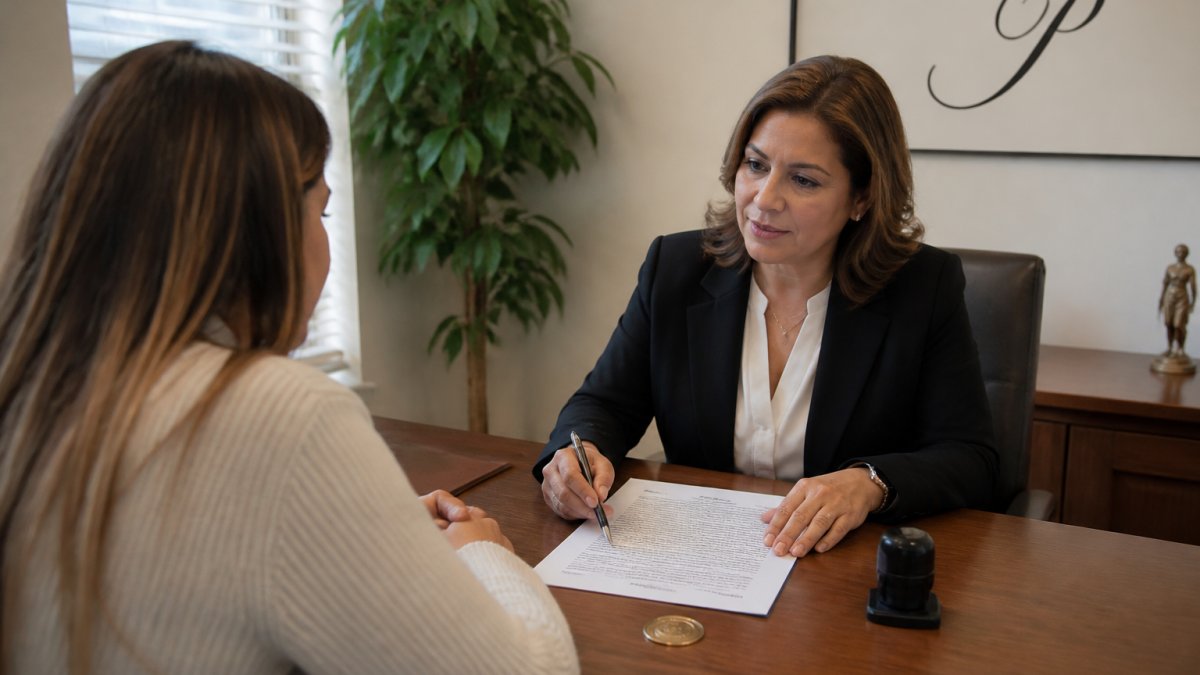
Use this checklist before you go:
- Confirm the document is complete and unsigned, unless the notary has instructed otherwise
- Bring valid, unexpired photo ID
- Bring the full document, including all pages and exhibits
One more insider point: do not sign anything until the notary is in front of you.
Book Your Bilingual Notary Appointment
The language rules are manageable once you separate them. Document in Spanish, certificate in English, and clear communication between you and the notary. Get those three aligned and the appointment is routine.
If you would rather not sort through it alone, Premier Multiservices offers bilingual notary and document preparation services for North Las Vegas. Our bilingual team works in English and Spanish, so nothing gets lost between the oath and the signature.
Frequently Asked Questions
Can a notary notarize a document written in Spanish?
Yes, a notary can notarize a document written in Spanish. The key is that the notary must be able to communicate with the signer to confirm identity, willingness, and awareness of the document's contents. The notarial certificate itself is typically completed in English, even when the document is in Spanish. State law governs the exact requirements, so check your state's notary rules before your appointment.
Does a Spanish document need to be translated before notarization?
Not always. A notary can often notarize a Spanish document without a translation, as long as the notary and signer share a language for the signing process. A translation may be required by the receiving agency, such as a court or government office, or for international use. If a certified translation is needed, it is usually prepared separately and may require its own notarized translator's affidavit.
Can a notary also act as a translator for a Spanish document?
A notary who is fluent in both English and Spanish can communicate with the signer and explain the notarial act, but acting as a formal translator is a separate role. Many states require the notary to be able to communicate directly with the signer, which a bilingual notary can do. For a certified translation of the document itself, a qualified translator is typically needed, and the translator's certification may need to be notarized.
What should I bring to a notary for a Spanish-language document?
Bring the original Spanish document, a valid government-issued photo ID, and any instructions from the receiving agency about translation or certificate language. If a translator is involved, bring the translated version and the translator's affidavit if required. Confirm ahead of time whether the notary is bilingual in Spanish, and ask whether the notarial certificate will be completed in English or Spanish.
Sorting out a Spanish-language document should not require a second appointment because of a certificate detail nobody mentioned. Premier Multiservices offers bilingual notary and document preparation with in-office notary and document authentication, secure handling of sensitive legal documents, and clear communication at every step. Get started with Premier Multiservices and walk into your signing confident that the paperwork will be accepted the first time.