 Ultimate guide
Why Document Authentication Stops Fraud Before It Starts
Last Updated: November 24, 2026
Quick Summary
Document authentication confirms that a document is genuine, was issued by the body it claims, and has not been altered. Because forged or tampered paperwork is a common route into identity fraud and unauthorized transactions, checking documents before relying on them stops fraud early, when it costs far less to address.
- Forgery, alteration and impersonation each require a different kind of check.
- Verify documents against a trusted source; appearance alone is not validation.
- Record every check so decisions can be audited and reviewed later.
- Escalate inconclusive documents through a defined path rather than deciding alone.
- Limit collected personal data and set retention rules for verification files.
Table of Contents
- What Document Authentication Means and Why It Matters
- How Document Verification Helps Prevent Fraud
- Common Document Fraud Types: Forgery, Alteration and Impersonation
- A Practical Document Verification Workflow
- Nevada Notary Requirements and Document Authentication
- Apostille Services for International Documents
- Protecting Personal Data During Authentication
- Book Your Document Authentication With Premier Multiservices
- Frequently Asked Questions
What Document Authentication Means and Why It Matters
Document authentication is the process of confirming that a document is genuine, was issued by the body it claims to come from, and has not been altered. It matters because forged or tampered paperwork is one of the most common routes into identity fraud, account takeover and unauthorized transactions.
Fraud prevention depends on verifying identity evidence before it is trusted. Businesses that skip this step often discover the problem only after money has moved.
Authentication covers several related checks. Reviewers confirm the issuer, look for signs of alteration, compare the details against the original record where possible, and confirm that the signer is the person they claim to be.
How Document Verification Helps Prevent Fraud
Document verification is the step that turns a submitted file into evidence. A verified document has been compared against a trusted reference, whether that is the issuing agency, a notary journal entry, or a security feature the issuer is known to use.
Verification works best when it happens early. Catching an altered signature at intake costs far less than unwinding a transaction that closed on the strength of that signature. Many fraud losses trace back to a single document that nobody looked at closely.
Verification also deters fraud. People attempting to submit altered records are less likely to proceed when they know the document will be checked against its source.
Common Document Fraud Types: Forgery, Alteration and Impersonation
Fraud involving documents generally takes three forms.
- Forgery means creating a document that never existed in its claimed form, such as a fake identification card or a counterfeit notarial certificate.
- Alteration means changing a genuine document, such as editing a name, date or amount on a real record.
- Impersonation means presenting a real document that belongs to someone else, or signing as a person who has not authorized the act.
Each type calls for a different check. Forgeries are caught by inspecting security features and the issuer. Alterations are caught by looking for inconsistent fonts, spacing, or signs that a field was overwritten. Impersonation is caught by confirming the signer's identity in person and recording that check.
A Practical Document Verification Workflow
A workable authentication process follows a fixed sequence so that no step depends on memory or judgment alone. The goal is not to make every check identical, but to make every decision traceable and every inconclusive result land somewhere deliberate.
- Collect and confirm the document type and issuer. Identify what the document is supposed to be, which agency or body issued it, and what purpose it is being submitted for. A document that is valid for one purpose may be unacceptable for another.
- Inspect the physical or digital file. Check for the security features the issuer is known to use, consistent formatting, and any signs of alteration. For digital files, inspect the image itself rather than only the rendered preview.
- Validate against a trusted source. Compare the details against the issuing agency, a notary journal entry, or another authoritative record. Appearance alone is not validation.
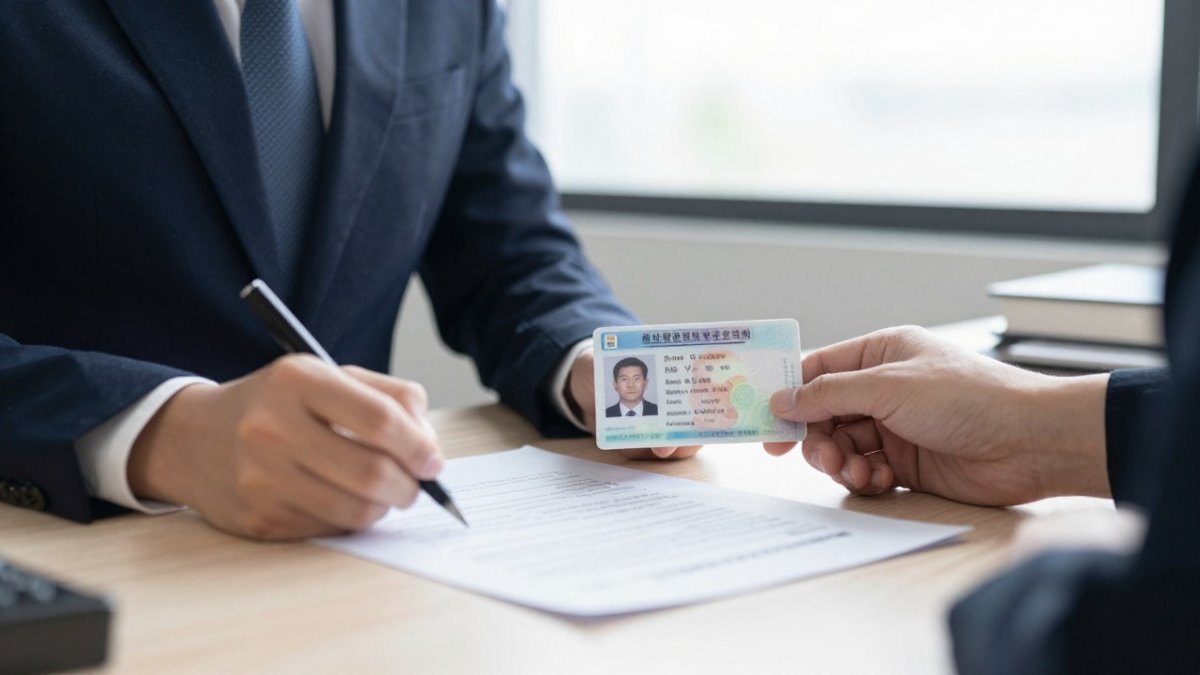
- Verify the signer or presenter. Review government-issued identification and confirm it matches the person present or the person on the account.
- Record the check. Log what was reviewed, when, by whom, and what the outcome was, so the decision can be audited later.
- Escalate anything unclear. Pass questionable documents to a second reviewer rather than deciding alone, and define in advance what 'unclear' means.
Documenting each step matters as much as performing it. A record of the check is what allows a business to show later that it acted reasonably, and it is what makes a second review possible without starting over.
Checking Security Features and Source Validity
Security features vary by document type, and no single checklist covers every issuer. Reviewers should confirm the features that the issuing body is known to use, such as watermarks, embossed seals, microprinting, ultraviolet response, or specific paper and printing characteristics.
Source validity is a separate question from appearance. A document can look perfect and still be invalid if it was revoked, expired, or issued by an agency that does not produce that format.
Watch out: a document that passes every visual check can still fail source validation, so treat appearance and validity as two separate gates rather than one combined judgment.
When Human Review Beats Automated Checks
Automated tools are fast and consistent, and they handle high volumes well. They can miss context, though. A trained reviewer notices when a name, address, and signature do not quite fit together, or when a document is technically valid but was issued for a different purpose.
The practical answer is layered review: automation for first-pass screening, human review for flagged files, unusual documents, and high-value transactions, and periodic manual sampling of accepted files to estimate how often the tool lets something through. That sampling is what turns a black-box tool into a measured control.
What Happens When Checks Are Inconclusive
Most guides stop at 'escalate,' but the inconclusive case is where fraud often slips through. A document that cannot be confirmed should not be treated as either approved or rejected by default.
The path should be written down before it is needed, including who has authority to approve an exception and what evidence must be attached to that approval. Without that, escalation becomes a judgment call made under time pressure, which is exactly the condition fraud attempts are designed to create.
Nevada Notary Requirements and Document Authentication
Notarization and authentication are related but distinct. A notary confirms the identity of the person signing and records the act, while authentication confirms that a document is genuine for use in another setting. Nevada sets its own rules for notarial acts, including the identification a notary must accept and how the act must be recorded.
Requirements for specific notarial acts are set by Nevada law, so check the current rules on the official state site before relying on any figure.
Apostille Services for International Documents
An apostille is a certificate that authenticates a document for use in countries that participate in the Hague Apostille Convention. It is issued after the document has been validated by the appropriate state or federal authority.
You can find Premier Multiservices's apostille services in Las Vegas and North Las Vegas for help with international use, in English or Spanish.
Not every notary can handle an apostille, and the process differs by document. Our guide on whether any notary can do an apostille explains the difference, and which documents must be apostilled lists the common cases.
Protecting Personal Data During Authentication
Authentication involves sensitive personal information, including birth dates, government ID numbers, signatures, and sometimes biometric data. Protecting that data is part of doing the job properly, and it is also where many authentication programs quietly create new risk: the verification file becomes a concentrated store of the very information fraudsters want.
The practical approach is to limit what is collected, secure what is kept, and define how long it stays. Each of those is a decision, not a default.
Collect Only What the Check Requires
Every field collected during authentication should map to a specific check. If a reviewer does not need a full date of birth to confirm a signature, do not collect it. If a document image is needed only to confirm a seal, consider whether a cropped image or a recorded observation would serve the same purpose.
Consent is a related question. Where consent is required for identity verification or for retaining copies, it should be specific about what is collected and why, and it should be recorded alongside the verification result. A generic consent buried in terms of service is a weak foundation if a customer later disputes how their information was handled.
Control Access and Storage
Access should be limited to the people who need it for the specific task, and that access should be logged. Shared drives and email attachments are common weak points because they spread copies beyond the controlled system. Documents should be stored in a system that records who viewed or downloaded them, and copies should be kept only as long as the purpose requires.
Watch out: the most common privacy failure in authentication is not a breach of the main system but a stray copy left in an inbox, a shared folder, or a local download that nobody tracked.
Set Retention and Destruction Rules
Retention should be defined by document type and by the reason it is kept, not by a single blanket period. A notary journal entry, a verification screenshot, and a copy of a customer's identification may each have different retention needs and different legal drivers. The policy should state, for each category, how long it is kept, who can access it, and how it is destroyed at the end of that period.
Businesses handling personal records should review the consent and retention obligations that govern their records under applicable federal and state rules, and keep their policy current.
Keep the Audit Trail Without Keeping Everything
A useful middle path is to retain the decision and its basis rather than every raw file. Recording what was checked, when, by whom, and what the outcome was can satisfy audit and dispute needs while allowing the underlying images and identifiers to be deleted sooner. That reduces the concentration of sensitive data without weakening the ability to show that a reasonable check took place.
Book Your Document Authentication With Premier Multiservices
Fraud prevention depends on checking documents carefully before anyone relies on them. Premier Multiservices offers in-office notary and document authentication in North Las Vegas, with bilingual support in English and Spanish, and provides secure handling of sensitive legal documents. If you need a document verified or prepared for use here or abroad, contact us to book an appointment.
Frequently Asked Questions
What is the main purpose of document authentication?
The main purpose of document authentication is to confirm that a document is genuine, was issued by the body it claims to come from, and has not been forged or altered. For fraud prevention, this check happens before a document is accepted for onboarding, a financial transaction, a property transfer or a legal filing. Authentication does not replace the issuing agency's records, but it gives the receiving party a reliable basis for trusting the document. In practice, a trained reviewer or verification tool compares security features, issuer details and content consistency against known standards.
What is the difference between notarization and document authentication?
A notary public in Nevada verifies the identity of the person signing a document, confirms that the signer is acting willingly, and records the act in a journal. Notarization does not confirm that the content of the document is true. Document authentication, by contrast, is a process that confirms the document itself is genuine, for example through an apostille issued by the Nevada Secretary of State for use abroad. Both steps can be needed for the same file, and a document-verification process will often include a notary check as one part of a larger review.
How does document verification process reduce identity theft?
A document verification process reduces identity theft by checking whether an identification record is authentic and whether the person presenting it matches the record. Reviewers look for altered text, mismatched fonts, inconsistent issue dates and missing security features, then confirm the details against the issuing source where possible. Combining these checks with a live comparison of the signer's appearance makes it harder for someone using a stolen or fabricated document to pass as another person. Review standards and tools vary, so organizations should document their own procedures.
Where can I get help with apostilles and Nevada notary requirements?
Premier Multiservices offers in-office notary and document authentication in North Las Vegas, with support in English and Spanish. Pricing depends on the document type, the number of documents and the delivery timeline, so please check the Premier Multiservices website for current pricing or request a quote before you visit. Booking an appointment in advance helps the team prepare your paperwork and review it carefully.